
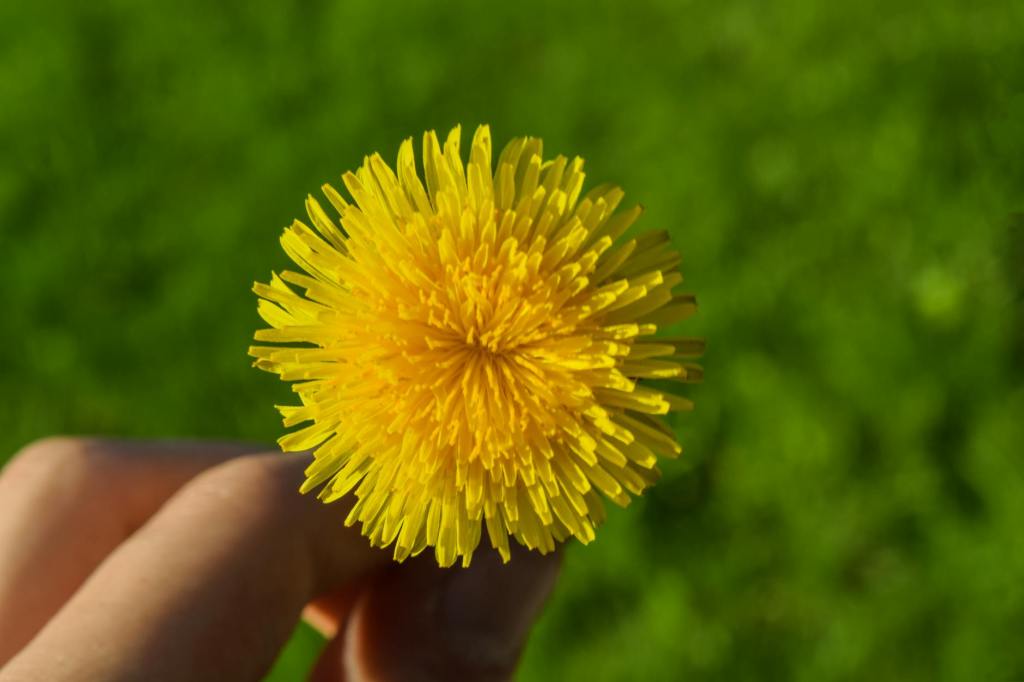
Every spring, I think “maybe I won’t need to have “the conversation” with anyone this year!” Every spring, I end up having “the conversation.” “The conversation” centers around the bright yellow dandelion. “The conversation” usually goes something like this:
Person: I have to do something to get rid of all these weeds in my yard, it looks terrible.
Me: (innocent like) What weeds?
Person: Are you blind?! Can’t you see all of those horrendous dandelions ruining my yard?
Me: (still innocent like) Oh! The dandelions! I love dandelions and think they bring color and life to a lawn.
Person: (with a look of disgust and confusion on their face) What?
Me: Yes, I just love them and think they are beautiful! Did you know that the dandelion is entirely edible and can be great for your health, too? If you stop using chemicals on your lawn, I can come and show you how to harvest them and share a few recipes that are delicious!
Person: …..
That is usually the end of “the conversation.” Occasionally, the Person will give a follow up question, to my delight, about how to use dandelion or just what those health benefits are. So, I thought you might want to be prepared for “the conversation” this spring. After reading this article, I hope you will be armed with enough information to engage in a discussion with others.

Dandelion, Taraxacum officinale, is a perennial that belongs to the Asteraceae family and is found throughout the northern hemisphere in areas with moist soil and a dry sun. They are even cultivated in many areas. They have a single, long taproot with a basal rosette of simple, deep lobed leaves just above it. The leaves are 5-10 inches long with sharp teeth and white, milky latex exudate that appears when broken. One or more leafless and hollow stems arise from the rosette of leaves that are 2-18 inches tall and have the same white, milky latex exudate when broken. Each stem has one yellow flower head with ray florets that opens during the day and closes at night. The flower heads are 1.5 inches in diameter and bloom in spring, summer and fall. The flower heads will mature into spherical seed heads that are olive or brown.
As mentioned earlier, the entire plant can be beneficial and eaten. The root tastes similar to a turnip, leaves are bitter but pleasant and flowers are sweet like honey. Harvest leaves in the spring for the best taste, flowers when in bloom and roots that are at least 2 years old in the autumn for the highest therapeutic value.
The use of the dandelion for its therapeutic benefits dates back to the 7th century in China. It also has a strong history in Arabian medicine, Whales, Germany, India and Mexico among others. Dandelion roots contain constituents that can help to relieve constipation, aid in digestion, stimulate bile flow, protect and detox the liver, lower blood glucose, act as a prebiotic, lower cholesterol, provide dietary fiber, fight inflammation, provide antioxidants, fight cancer and fight depression. The leaves have constituents that also aid in digestion, act as a diuretic, are nutritious, protect the liver, detox kidneys, are antibacterial and fight cancer, depression, cholesterol and inflammation. The flowers have several antioxidants in them. Other constituents throughout the dandelion aid in pain relief, fighting rheumatism, weight loss, kidney repair, protecting the lungs, improving fatigue and immune system and bone disease prevention.
Specifically, dandelion may help the body in dealing with coughs, headaches including migraines, maintaining healthy eyes, blood pressure, inflammation, high cholesterol, thick blood, iron deficiency anemia (fresh greens), poor digestion, liver hemorrhages, non-alcoholic fatty liver disease, cirrhosis, hepatitis, constipation, stomachache, toothache, gallbladder and pancreas health, peptic ulcers, poor appetite, bloating, metabolic syndrome, type 2 diabetes, obesity, osteoporosis and arthritis prevention, muscle cramps and spasms, fluid retention, gynecological diseases, breast hyperplasia, pelvic inflammatory disease, kidney stones, urinary tract infection prevention, low potassium levels, tumors, fever, and immune regulation. Juice from stems and leaves can be used for dyshidrotic hand eczema, wounds, blisters, rashes, ringworm, warts, corns and acne.
As with any plant, someone may be allergic to it especially if they have an allergy to other plants in the daisy family. Caution should be used with the root if gallstones are present. This plant is generally regarded as safe for those who are pregnant or breastfeeding. As always, you should consult your healthcare provider before using this or other herbs for therapeutic purposes.
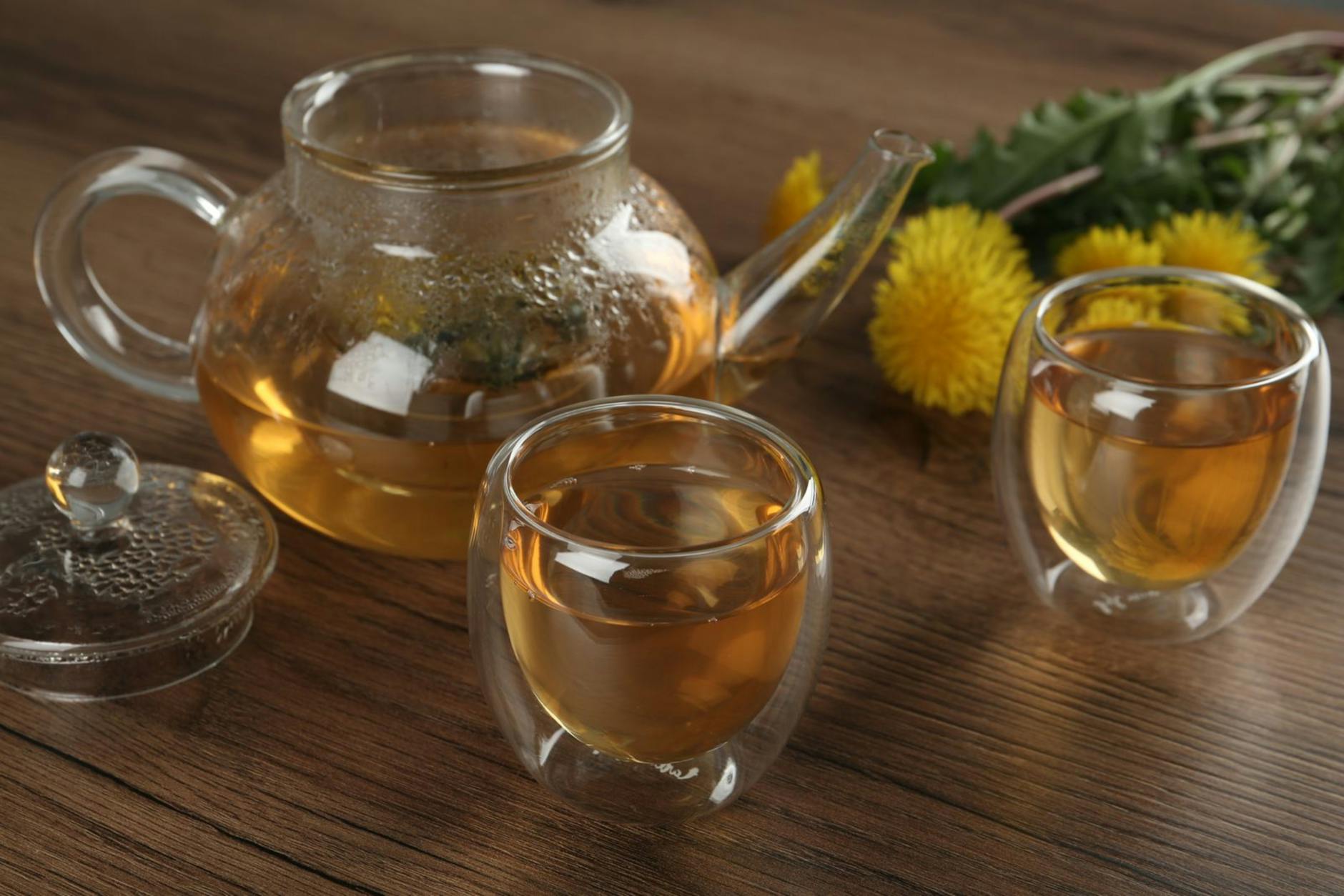
In the kitchen with dandelion, you can cook the roots as you do other root vegetables, roast and grind them as a coffee substitute, or make a tea from them. The leaves make a delicious and nutritious addition to a garden salad. They may also be steamed, fried with rice, added to soup, cooked with bacon and served with an egg sauce, wilted as with other greens, used for tea, dried and used as a spice or seasoning, extracted and used in alcoholic and soft drinks, frozen dairy desserts, candies, baked goods, pudding and cheese. The flowers can be used for wine, jelly or syrups, cooked for fritters, raw in salads or tea, boiled and served with butter, or add buds in pancakes or omelets or preserved in vinegar and used like a caper.
This is how I make dandelion jelly: 4 cups of boiling water poured over about 4 cups of yellow flower petals and steep for about 24 hours. Strain. Add the tea to a heavy pan and add 2 tablespoons of lemon juice and a box of pectin. Bring to a rapid boil then add 4 cups of sugar. Bring back to a boil and boil 1-2 minutes. Pour into prepared jelly jars and leave ¼ inch headspace before putting lid on with ring. Process in water bath for 10 minutes then cool on the counter for 24 hours making sure seals are set. If they did not seal, put in fridge and use straight away.
Please remember that nothing in this article is meant to replace the advice of your healthcare provided nor is it meant to treat, diagnose, or cure any diseases. The information here is for informational purposes only and has not been approved by the FDA.
At our store, we carry dried dandelion leaves and roots as well as extracts from the leaves and roots. If you mention this article, receive 10% off of your dandelion products through the end of July, 2025. Our store, Amy’s Relation to Creation & Botanicals, is located at 256 S. Water St. Marine City, MI 48039 and we are open Tuesday through Saturday. Stop in and tell me what you are doing with dandelions this year!
References:
Apelian N, Davis C. The Lost Book of Herbal Remedies: The Healing Power of Plant Medicine. Global Brother SRL. 2019.
Balch P, CNC. Prescription For Herbal Healing. Avery. 2002.
Chevalier A. Encyclopedia of Herbal Medicine 4th edition. DK Penguin Random House. 2023.
Chevalier A. Herbal Remedies Handbook. DK Penguin Random House. 2021.
Drugs and Lactation Database (LactMed®) [Internet]. Bethesda (MD): National Institute of Child Health and Human Development; 2006-. Dandelion. [Updated 2021 Feb 15]. Available from: https://www.ncbi.nlm.nih.gov/books/NBK501872/
Fan M, Zhang X, Song H, Zhang Y. Dandelion (Taraxacum Genus): A Review of Chemical Constituents and Pharmacological Effects. Molecules. 2023 Jun 27;28(13):5022. doi: 10.3390/molecules28135022. PMID: 37446683; PMCID: PMC10343869.
Foster S, Duke J. Peterson Field Guides: Eastern/Central Medicinal Plants and Herbs. Second ed. Houghton Mifflin Company. 2000.
Kania-Dobrowolska M, Baraniak J. Dandelion (Taraxacum officinale L.) as a Source of Biologically Active Compounds Supporting the Therapy of Co-Existing Diseases in Metabolic Syndrome. Foods. 2022 Sep 15;11(18):2858. doi: 10.3390/foods11182858. PMID: 36140985; PMCID: PMC9498421.
Olas B. New Perspectives on the Effect of Dandelion, Its Food Products and Other Preparations on the Cardiovascular System and Its Diseases. Nutrients. 2022 Mar 24;14(7):1350. doi: 10.3390/nu14071350. PMID: 35405963; PMCID: PMC9002813.
Product Reverence Guide. Pure Herbs, LTD. Third edition printed 2022.
Tekiela S. Wildflowers of Michigan Field Guide Adventure Publications, 2000.
The Dandelion. Halls J Health. 1891 Jul;38(7):163. PMID: 36492410; PMCID: PMC9242275.
Webb S editor. Nursing Herbal Medicine Handbook 3rd edition. Lippincott Williams & Wilkins. 2006.
Wirngo FE, Lambert MN, Jeppesen PB. The Physiological Effects of Dandelion (Taraxacum Officinale) in Type 2 Diabetes. Rev Diabet Stud. 2016 Summer-Fall;13(2-3):113-131. doi: 10.1900/RDS.2016.13.113. Epub 2016 Aug 10. PMID: 28012278; PMCID: PMC5553762.
 Amy's Relation to Creation & Botanicals, LLC
Leave a comment